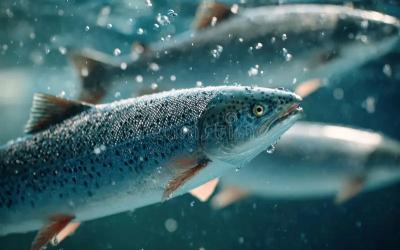
One can think that South Chile Pacific waters would have less impacts related to El Niño warm event, but experience from previous cases of El Niño show that the change of water temperature, winds and currents, can lead to stagnant waters with different composition, which at same time drive the risk of development of algae species that can turn into a severe problem when cause harmful algal blooms (HAB), that are dangerous because are irritating for salmonid gills, and its huge population can deplete the oxygen after dying in mass. This is not a simple occurrence, during 2016, El Niño contributed to a mass mortality event which killed around 27 million salmon and trout in the Los Lagos Region of Chile. Another related problem is the change of growth rate, as feed conversion drops and mortality grows.
Chile scientists and farming groups are joining efforts to discover patterns in the phytoplankton that can help them to predict when a HAB could happen, and are studying what measures should be taken by then to reduce the potential losses.
But other market factors are adding risks to the salmon industry : lower prices of salmon and trout, higher freight rates and record-high prices of fishmeal ( a main feed ingredient) are also affecting the business.