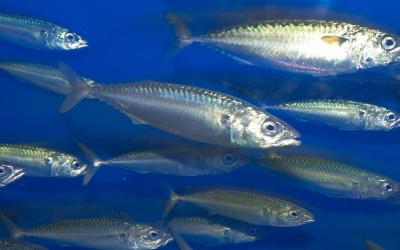
On 16 December 2025, the UK, Norway, the Faroe Islands, and Iceland reached a 2026 sharing arrangement for Northeast Atlantic mackerel, again leaving the European Union outside the core deal. The arrangement sets a 2026 total allowable catch (TAC) of 299,010 MT, a 48% year-on-year reduction, but still more than 100,000 MT above International Council for the Exploration of the Sea ICES’ scientific advice of 174,357 MT. Before bilateral access talks, the “gross” split was 28.24% for Norway, 25.36% for the UK, 13.35% for the Faroes, and 12.5% for Iceland—its first inclusion in a mackerel-sharing arrangement. After access swaps (where parties return part of their quota in exchange for fishing access in one another’s waters), the “net” shares shift to 30.55% for the UK, 26.4% for Norway, 12% for the Faroes, and 10.5% for Iceland. The remaining 20.55% is left for the EU, Greenland, and Russia, which are not signatories. The backdrop is more than a decade of persistent overfishing and ongoing difficulty in reaching a fully comprehensive coastal-state agreement aligned with scientific advice.
Separate quota talks in the Barents Sea underline how geopolitics is increasingly shaping North Atlantic fisheries management. Norway and Russia agreed 2026 quotas for shared stocks -Northeast Arctic cod at 285,000 MT (down 16% vs 2025), haddock at 153,293 MT (up 18%), Greenland halibut unchanged at 19,000 MT, and no capelin fishery due to insufficient biomass- while disputes simmered over Norway’s July sanctions on major Russian companies. The contrast is stark: Russia is outside the mackerel deal , described above, yet remains central in other regional quota settings, highlighting how political frictions complicate comprehensive, science-aligned coastal-state agreements.